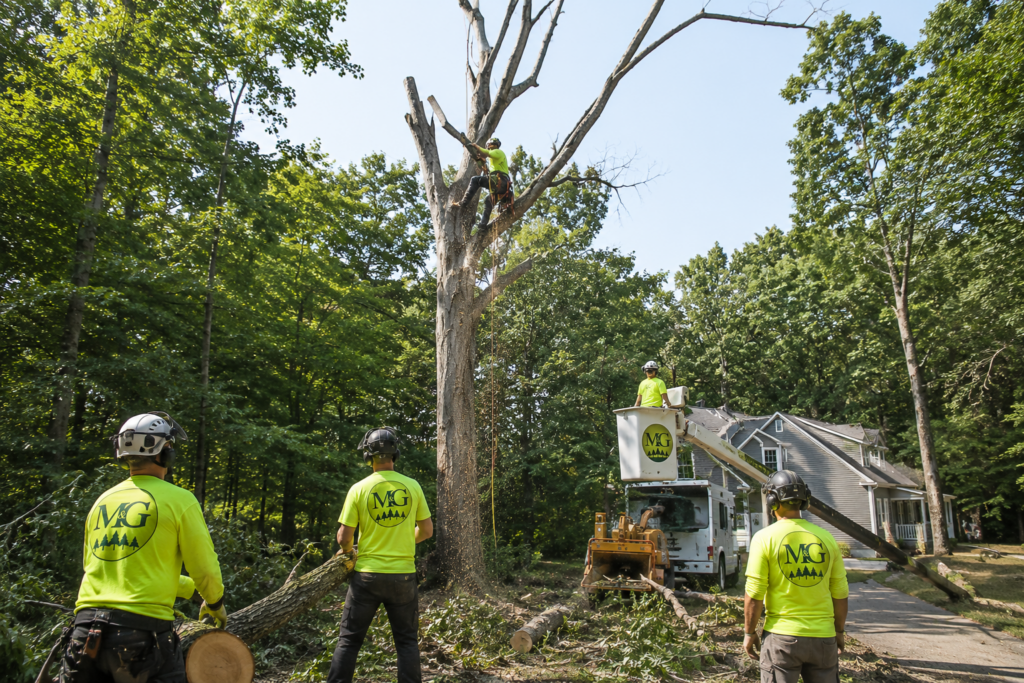
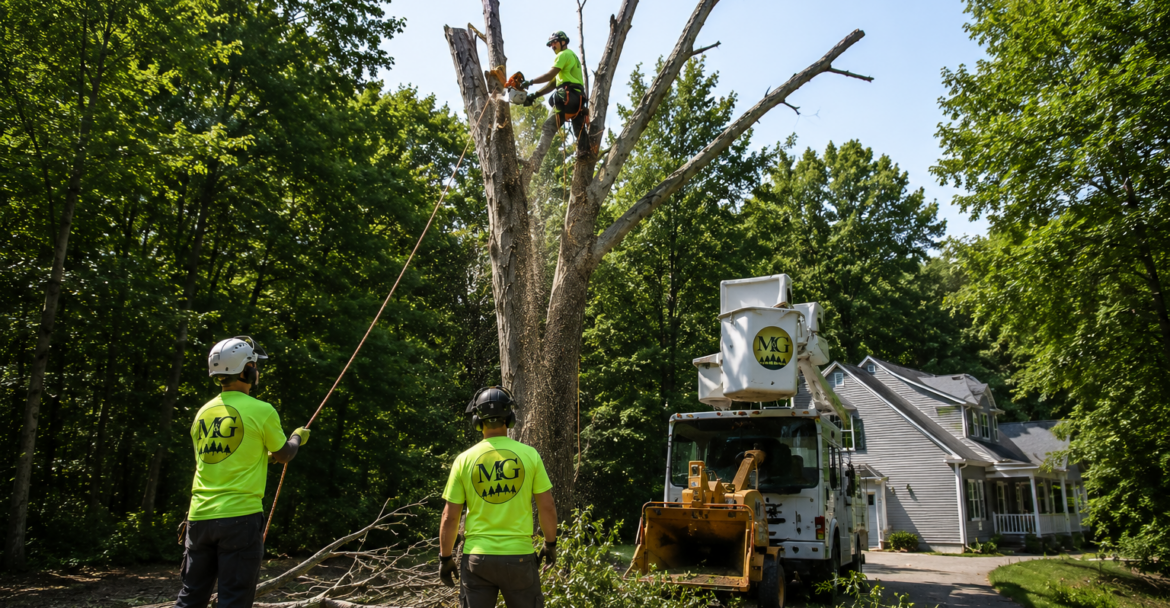
Imagine looking out your window and noticing a large dead tree standing on your neighbor’s property. The tree is leaning toward your home, garage, driveway, or fence. You know it’s only a matter of time before a strong storm, heavy snow, or high winds bring it down.
This exact situation recently occurred with one of our customers at M&G Tree Services.
The homeowner noticed a severely declining tree on a neighboring property and became concerned that it could eventually fail and damage their home. They did the right thing by speaking with the neighbor and bringing the issue to their attention. Unfortunately, before any action could be taken, a storm moved through the area and the tree came crashing down.
The damage to their property was significant to say the least. The situation highlights an important lesson for Connecticut homeowners: when it comes to hazardous trees, waiting can be costly.
What Rights Do Connecticut Property Owners Have?
In Connecticut, property owners generally have the responsibility to maintain trees on their property. If a healthy tree falls during a storm due to an unforeseeable event, it is often considered an “Act of God,” and the affected property owner’s insurance typically handles the damages.
However, the situation can be different when a tree is clearly dead, dying, or otherwise hazardous.
If a property owner knew-or reasonably should have known-that a tree posed a danger and failed to address the problem, they may potentially be held liable for damages caused by the tree’s failure. This is why documenting concerns and communicating with neighbors can be extremely important.
While every situation is unique and legal questions should be directed to an attorney, homeowners should not ignore obvious signs of tree decline when those trees threaten neighboring properties.
Warning Signs of a Dangerous Tree:
Many hazardous trees show visible signs of distress long before they fail. Some common indicators include:
- Dead or missing foliage during the growing season
- Large dead branches in the canopy
- Significant bark loss
- Hollow cavities in the trunk
- Cracks or splits in the stem
- Fungal growth at the base of the tree
- Leaning trees with recent movement
- Root damage or soil upheaval
- Extensive insect activity
- Large sections of dead wood
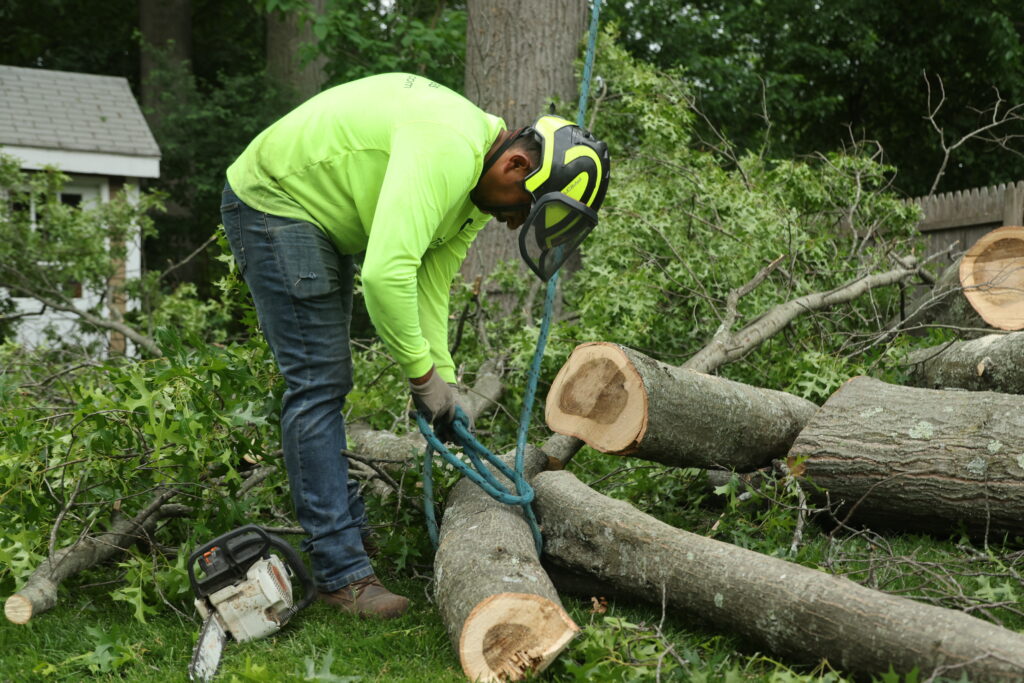
If you notice any of these conditions on a tree near your home-even if the tree is located on a neighboring property-it may be worth having the tree evaluated.
How an Arborist Can Help?
One of the most valuable steps a homeowner can take is to obtain a professional assessment.
At M&G Tree Services, we routinely perform visual tree inspections to identify obvious signs of decline, structural defects, and potential hazards. While a visual inspection is not the same as an advanced diagnostic assessment, it can often identify trees that warrant immediate attention.
An experienced tree professional can:
- Assess the visible condition of the tree
- Document signs of decline or structural defects
- Provide recommendations for pruning, monitoring, or removal
- Prepare written observations that can be shared with property owners
- Help homeowners better understand potential risks
In many cases, a simple inspection can provide the information needed to start a productive conversation before a tree becomes an emergency.
Why Being Proactive Matters?
The cost of removing a hazardous tree is almost always lower than the cost of repairing a damaged home, garage, vehicle, fence, or landscape after a tree failure.
More importantly, falling trees and limbs can cause serious injuries or even fatalities.
If you are concerned about a tree that could impact your property, don’t assume someone else will address it. Take photos, communicate your concerns respectfully, and consider obtaining a professional assessment. Early action often provides the greatest opportunity to prevent property damage and keep everyone safe.
Don’t Wait for the Next Storm
Storms have a way of exposing problems that have been developing for years. Dead and declining trees rarely improve on their own, and the risks typically increase with time.
If you have concerns about a tree on your property or a neighboring property, M&G Tree Services can provide a professional visual assessment and recommendations based on the tree’s condition. When removal is necessary, our experienced team has the equipment and expertise to safely remove hazardous trees, even in difficult locations near homes, garages, fences, and utility lines.
The best time to address a dangerous tree is before the storm arrives.
Conclusion:
A neighbor’s dead tree may seem like someone else’s responsibility, but when it threatens your home, family, or property, taking action early is essential. Understanding Connecticut property laws, documenting the hazard, and communicating with your neighbor can help prevent costly damage and avoid potential disputes. If the tree poses a safety risk, a professional inspection is the best way to determine the right course of action. At M&G Tree Services, We help Connecticut homeowners identify hazardous trees, assess potential risks, and provide safe, reliable tree removal services. Taking proactive steps today can protect your property and provide peace of mind for years to come.